School, practice, and collaboration
Resources for teachers: supporting a student with attention difficulties
Attention difficulties can appear in many ways in class: starting a task, following an instruction, finding materials, moving between activities, taking turns, or staying engaged. They do not automatically indicate ADHD or allow a teacher to make a diagnosis.
Educational observation and adjustments to the setting can nevertheless help a student access learning more fully. Institutional resources encourage starting with identified needs and individualizing responses rather than applying one recipe.
This guide is for teachers, school staff, and parents preparing to speak with school. It offers concrete pointers while strictly respecting the limits of each person's role.
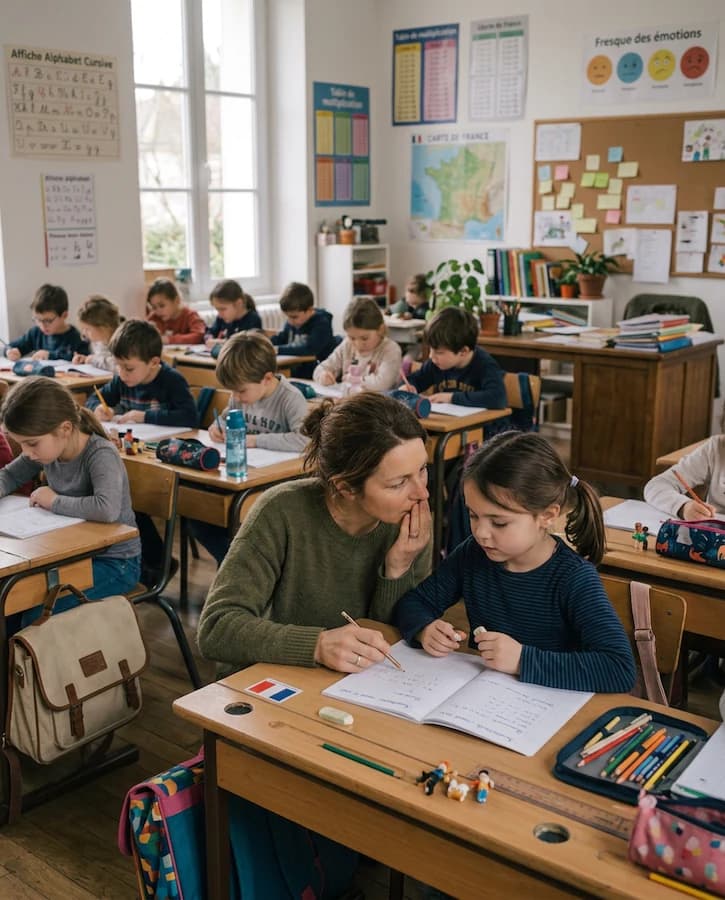
Attention difficulties at school
School can support attention through concrete guidance without confusing educational observation with diagnosis.
Observe classroom situations without labeling the student
Describing a student losing track after a long instruction, struggling to start after a transition, or finding materials more easily with a visual cue provides usable information. Calling them “inattentive,” “lazy,” or “ADHD” describes neither the context nor the needs.
A descriptive observation can be shared with the family and team while respecting confidentiality. It helps identify what facilitates learning without reducing the student to a difficulty.
Adjustments to try and observe
These ideas are not prescriptions. Their value depends on the student, subject, time of day, and what has already been tried successfully.
Instructions and transitions
Making the first step visible, announcing a change of activity, and checking understanding can reduce some moments of confusion.
Work environment
Materials organization, seating, distractions, and access to supports can be adjusted according to tasks and classroom possibilities.
Cognitive load and positive reinforcement
Breaking down the workload, planning useful breaks, and recognizing a specific strategy or improvement can support engagement without automatically lowering expectations.
Describe an educational need without reducing the student to a diagnosis
A useful observation specifies the task, moment, and effect: “after a three-step spoken instruction, they start the last step and forget the first two” conveys more than “they never listen.” It also allows an adjustment to be tested to see whether it improves access to learning.
A diagnosis may shed light on some difficulties, but it predicts neither every student's academic level nor behavior. Strengths, interests, learning, language, sleep, and classroom context remain essential.
Intervene before things break down rather than after difficulties build up
Make it explicit
A short, visible instruction whose understanding is checked reduces dependence on repeated public reminders.
Give a signal
A discreet signal agreed with the student can help them return to the task without drawing attention in front of the group.
Plan ahead
Planning the move between activities limits surprise and makes restarting easier.
Share information with families that supports action
A balanced conversation also mentions successful situations and helpful conditions. Choosing a shared goal, a strategy, and a review date avoids sending messages only when incidents occur. Confidentiality must be respected: students do not need their diagnosis disclosed to the group to receive help.
A significant learning difficulty, distress, bullying, or sudden change should be reported according to school procedures and discussed with the family. Teachers contribute to identification and support; they do not make the clinical diagnosis.
Guidance for respectful family–school collaboration
Family–school collaboration is more useful when neither is asked to fulfill the other's role. It aims to build a shared understanding of learning needs and possible adjustments.
- Share specific examples, including moments when the student succeeds
- Clarify what can be observed at school and what concerns health or family life
- Respect the confidentiality of information shared by the family
- Involve the student in finding age-appropriate supports
- Draw on the school team and existing support arrangements when difficulties persist
The limits of the teacher's role and school resources
Teachers can identify a difficulty, describe its educational impact, and involve the school team. They cannot confirm ADHD, independently interpret medical information, or impose a support plan. Adjustments are discussed with relevant contacts and adapted to the student's experience.
When difficulties persist despite initial supports, school resources, support networks, or relevant professionals can help analyze the situation. Parents remain essential partners in this dialogue.
Cereya ADHD
Support precise dialogue between family and school
Cereya's child ADHD assessment is intended for parents and children. It can help a family organize situations to share with school without evaluating teachers' practice.
It does not provide a diagnosis, replace educational observation, or determine classroom adjustments.
- assessment supported by a parent or legal guardian
- questions for the parent and child
- brief attention exercises adapted to age
- informative report with points requiring caution
- no medical diagnosis
Initial summary included; detailed analysis available afterward.
Attention difficulties at school
School can support attention through concrete guidance without confusing educational observation with diagnosis.
FAQ
Frequently asked questions
What is the teacher's role when ADHD is possible?+
Teachers can describe observed situations, their effects on learning, and what helps the student. Diagnosis is the role of a trained doctor; school contributes a complementary educational perspective without labeling the student.
What adjustments can be tried in class?+
A short instruction, a visible step, a check of understanding, advance notice of a transition, or organized materials can help some students. Their value varies with the task, age, class, and actual observed needs.
How can you observe without labeling?+
A descriptive observation identifies what happens, in which setting, with what consequences, and which supports seem effective. It avoids interpretations about intention, character, or a presumed diagnosis.
How can you work with the family?+
Dialogue benefits from specific examples of both successes and difficulties, while respecting the confidentiality of health information. Families, schools, and professionals have different roles but can coordinate observations with the consent of those concerned.
Is there a list of adjustments that works for every student?+
No. Useful adjustments are individualized and evaluated within the classroom context. A list can offer ideas but does not replace educational judgment, existing support plans, or the student's specific needs.
References and resources
These educational and institutional resources offer guidance for identifying educational needs and adapting teaching. They do not transfer a diagnostic or medical role to schools.
- éduscol — Attention difficulties in students: how to respond?
- éduscol — Teaching students with special educational needs.
- French Ministry of National Education — Schooling for students with special educational needs.
- NICE guideline NG87 — Collaboration with school and adjustments tailored to educational needs.
Explore further