School, procedures, and support
School accommodations and support for a child with ADHD
When a child experiences attention, organization, or fatigue difficulties at school, parents may wonder which accommodations to request and whom to contact. There is no single list: needs, classes, subjects, and existing supports differ from student to student.
Concrete dialogue among family, child, and school team helps identify what makes a situation more accessible. Adjustments may concern teaching, organization, or the environment, and can then be refined according to their effects.
This guide provides pointers for preparing that conversation, without promising an automatic support plan, recognition, or accommodation.
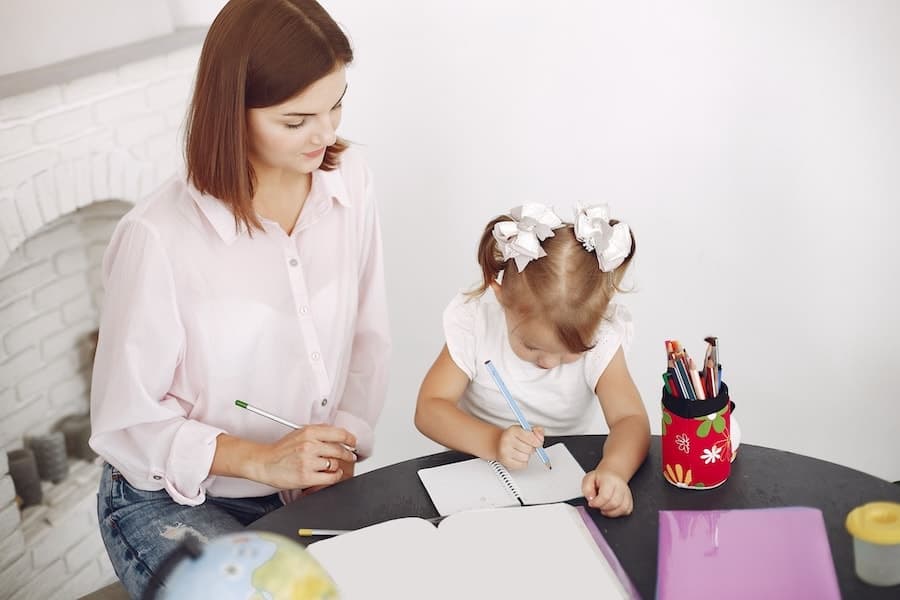
School accommodations
Useful adjustments respond to observed needs; they are not a template to apply automatically.
Start with the student's needs, not an automatic list
An adjustment is useful when it addresses a concrete difficulty: understanding instructions, settling in, getting started, staying engaged, managing a transition, demonstrating learning, or doing homework without disproportionate effort.
The aim is not to lower expectations for the child or overcome every obstacle on their behalf. It is to enable access to learning under conditions better suited to observed needs.
Teaching adjustments to individualize
These examples are not prescriptions. They help prepare a discussion in which the school team, family, and student consider what is relevant, feasible, and subject to review.
Instructions and materials
Breaking down a request, checking understanding, making steps visible, or offering suitable materials can help some students engage with a task.
Environment and transitions
Seating, available materials, distractions, transitions, or an activity's pace can be discussed within the classroom context.
Workload, homework, and assessment
Breaks, an adjusted workload, extra time, or assessment arrangements may be considered when they address an identified need and the team can implement them.
An accommodation addresses a specific functional obstacle
The question is not how to make school easier in general, but how to enable students to access learning or show what they know despite an identified difficulty. Written instructions may address forgotten steps; different timing or formats may address a specific slowness. Two children with the same diagnosis therefore do not automatically need the same measures.
Some adjustments are part of everyday teaching; others fall within a formal support plan depending on the situation. The choice depends on needs, available assessments, and the school framework. This guide offers pointers but does not determine the appropriate administrative arrangement.
Move from a general request to a trial that can be evaluated
A useful measure should improve access or independence without unnecessarily stigmatizing the child. If it shifts the problem, isolates the child, or greatly increases the teacher's workload without benefit, it should be reconsidered.
- Describe the task or moment that causes difficulty;
- Identify what the student can already do and what creates an obstacle;
- Choose a limited, feasible adjustment;
- Agree on the trial's duration and how its effect will be observed;
- Gather the student's perspective, not only those of adults.
Guidance for constructive family–school dialogue
Regular dialogue prevents adjustments from resting on assumptions or becoming an additional burden. It also allows for changes in class, school stage, or circumstances.
- Describe a few specific situations rather than a general difficulty
- Share what already helps the child at home, at school, or in an activity
- Listen to observations from the student and school team
- Choose a small number of priority adjustments and specify how their effects will be observed
- Plan a review rather than treating an accommodation as permanent
PPRE, PAP, and PPS: different frameworks, without automatic entitlement
In France, a PPRE can coordinate targeted responses to learning difficulties over a defined period. A PAP provides a framework for teaching adjustments addressing certain persistent school difficulties related to learning disorders, with input from the national education system's doctor. A PPS operates within a disability framework and involves the MDPH, the departmental disability office.
These plans are neither interchangeable nor automatic. Their implementation, content, and development depend on the student's situation, current procedures, and decisions by the relevant authorities. The school is the appropriate starting point for checking which framework applies.
Cereya ADHD
Prepare a constructive conversation about school needs
Cereya's child ADHD assessment can help organize examples to share with school or a professional when the child's difficulties warrant it.
It does not determine a support plan, decide accommodations, or replace dialogue with the school team and relevant professionals.
- assessment supported by a parent or legal guardian
- questions for the parent and child
- brief attention exercises adapted to age
- informative report with points requiring caution
- no medical diagnosis
Initial summary included; detailed analysis available afterward.
School accommodations
Useful adjustments respond to observed needs; they are not a template to apply automatically.
FAQ
Frequently asked questions
Does ADHD automatically entitle a child to accommodations?+
No. Adjustments are discussed based on the student's actual needs, school context, and school team observations. They are neither automatic nor identical for all children with ADHD or attention difficulties.
What teaching adjustments can be discussed?+
Clearer instructions, visual supports, an environment limiting some distractions, help with transitions, or adjusted workload management may be useful in some situations. Their relevance depends on the student, the task, and what is already in place.
What is the difference between a PPRE, PAP, and PPS?+
In France, a PPRE addresses targeted learning difficulties over a defined period. A PAP provides teaching adjustments in certain situations involving persistent school difficulties related to learning disorders, with medical input. A PPS operates within a different framework, involving disability and the MDPH, the departmental disability office. Arrangements should be checked with the school and relevant professionals.
What are the roles of family and school?+
Families can share concrete examples, what helps the child, and what remains difficult. The school team contributes classroom observations and implementation options. Depending on needs, a doctor, psychologist, or other professional may contribute while respecting their roles and medical confidentiality.
Can an online questionnaire determine accommodations?+
No. A questionnaire can help describe lived situations, but it cannot assess educational needs, grant a support plan, or define adjustments. These decisions are developed within the school setting and, when necessary, with relevant professionals.
References and resources
This guide combines recommendations on ADHD in children and adolescents with French institutional resources on educational responses. The support plans are presented for information; their conditions and procedures should be checked with the school and relevant contacts.
- Haute Autorité de Santé (2024) — Neurodevelopmental disorder/ADHD: diagnosis and therapeutic interventions for children and adolescents
- Haute Autorité de Santé (2015) — Primary care management of a child or adolescent with suspected ADHD
- NICE guideline NG87 — Attention deficit hyperactivity disorder: diagnosis and management
- American Academy of Pediatrics (2019) — Clinical Practice Guideline for the Diagnosis, Evaluation, and Treatment of ADHD in Children and Adolescents
- Faraone et al. (2021) — The World Federation of ADHD International Consensus Statement: 208 Evidence-based conclusions about the disorder
- American Psychiatric Association — DSM-5-TR, referenced descriptively without reproducing diagnostic criteria.
- World Health Organization — ICD-11, referenced descriptively as an international classification framework.
- Assurance Maladie — ADHD: symptoms, diagnosis, and development in children.
- Assurance Maladie — ADHD: prescribed care and support for children.
- French Ministry of National Education — Schooling for students with special educational needs.
- éduscol — Personalized educational success programs (PPRE).
Explore further